

Caterpillar
Observatory
-
Plants and Species
The following plants host different species of caterpillar: -
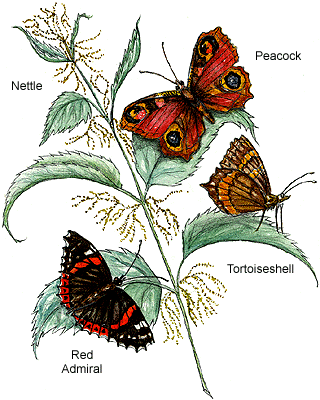
Nettles:
Small Tortoiseshell, Peacock and Red Admiral -
Brassicas or Cabbage Family:
Large White, Small White, Green-veined White -
Lady's Smock and Hedge Garlic:
Orange-Tip -
Various Grasses:
Speckled Wood, Wall, Grayling, Gatekeeper, Meadow Brown, Small Heath, Ringlet. -
Bird's Foot Trefoil:
Little Blue, Common Blue, Wood White, Dingy Skipper.
Requirements
A clear 5-litre plastic spring water container.
A craft knife and scissors.
A glass jar, which fits on to the neck of the plastic bottle (a small coffee jar is ideal).
Cotton wool
Muslin.
A large elastic band.
A craft knife and scissors.
A glass jar, which fits on to the neck of the plastic bottle (a small coffee jar is ideal).
Cotton wool
Muslin.
A large elastic band.

Using a plastic Water Container to make
A Caterpillar Observatory
A Caterpillar observatory can be made in exactly the same way as a Ladybird obseervatory. Children can learn about food chains as they watch the hungry caterpillars munch the leaves. The caterpillars will transform into pupae and butterflies will emerge in the spring. N.B. It is important, however, to remember that different species of caterpillar require different food plants.
Method
Cut around the base of the bottle about 4 cm from the bottom. Remove the off-cut. (This makes a useful tray for plant pots). Remove the lid from the bottle and insert the neck into the jar. (It should fit snugly). If it is loose bind the necks together with some sellotape or insulating tape. Stand the jar on a table and half-fill with water. Place chosen leaves or plants in the jar of water. Pack cotton wool around the top of the jar. This will prevent caterpillars from falling into the water. Cut out a piece of muslin to fit around the open end of the bottle and secure the muslin with the elastic band.
After Care
Put a fresh twig with aphids into the jar and remove the old one after a few days. Change the water regularly. Watch out for ladybird eggs, larvae and honeydew (excretion of ladybirds much sought after by ants).

Suggestion
A very easy one to try is the cabbage or nasturtium with their associated caterpillars. Bring these plants into the classroom in September/October. Change the leaves and water often. The caterpillars will transform into pupae in front of the children's eyes. The pupae should then be left in the coldest part of the school. Butterflies will emerge from them in the spring.
